Looking for a New Orleans neighborhood where you can spend your morning with coffee, your afternoon in galleries, and your evening a short walk from dinner and cocktails? The Warehouse District offers exactly that kind of rhythm. If you are drawn to architecture, culture, and a more connected downtown lifestyle, this area gives you a clear picture of what loft living can feel like in practice. Let’s dive in.
Where the Warehouse District Fits
In local use, the Warehouse District and Arts District often mean the same place. City historic district materials tie the neighborhood to its port and warehouse past, while today the area is better known for museums, galleries, tourism, and urban apartment and condominium living.
The district is roughly bounded by Magazine Street, Lafayette and Constance Streets, Poydras Street, Convention Center Boulevard, and the Expressway. That central location is part of the draw, especially if you want to be close to downtown activity without giving up the design character that makes New Orleans feel distinct.
Residential conversions accelerated after the 1984 World’s Fair, which helps explain why the area has such a strong mix of historic industrial architecture and modern residential use. For buyers, that usually means lofts, condos, and adaptive-reuse residences layered into a neighborhood that still feels tied to its original built form.
Start the Day on Foot
One of the biggest advantages of the Warehouse District is how compact it feels. New Orleans & Company even offers a self-guided walking tour of the neighborhood, which says a lot about how closely galleries, museums, restaurants, and shops are clustered.
If you picture a day here, it is easy to start with coffee or a pastry and then move straight into the cultural core of the neighborhood. Venues listed by the Arts District of New Orleans include places for coffee, dining, and casual daytime stops, which supports the district’s reputation as an all-day neighborhood rather than a place that only comes alive at night.
This kind of layout matters if you are considering living here. A neighborhood that functions well on foot can shape your daily routine in a very real way, especially if you value convenience and like the energy of being able to step outside and have your day unfold nearby.
Julia Street Anchors the Arts Scene
Julia Street is the neighborhood’s best-known art corridor. New Orleans & Company calls it Gallery Row, and the area is lined with more than a dozen galleries.
Current Arts District of New Orleans listings include names like Arthur Roger Gallery, Callan Contemporary, LeMieux Galleries, Ferrara Showman Gallery, and Orleans Gallery. For someone exploring the area as a potential home base, that concentration of galleries is not just a visitor perk. It is part of what gives the neighborhood its identity week after week.
The district also hosts recurring and signature arts events. Arts District of New Orleans highlights First Saturday Gallery Openings each month and White Linen Night as the neighborhood’s annual street-wide art event.
If you are the kind of buyer who wants your home to connect with the city’s creative life, this part of the Warehouse District stands out. You are not just near the arts. You are living in the middle of one of New Orleans’ most established cultural corridors.
Museums Add Daily Depth
The neighborhood’s cultural appeal goes well beyond galleries. Arts District of New Orleans lists the Contemporary Arts Center, the Ogden Museum of Southern Art, the National WWII Museum, and the Helis Foundation John Scott Center within the district.
That lineup gives the area unusual depth for a residential neighborhood. The Ogden Museum notes that it holds the largest and most comprehensive collection of Southern art, while the Contemporary Arts Center focuses on multidisciplinary contemporary work. The National WWII Museum describes itself as the nation’s official WWII museum.
For residents, that means your weekend plans do not have to involve a long drive or much planning at all. You can build a routine around exhibitions, events, and public programming that is already woven into the neighborhood.
Public Art Shapes the Streetscape
The Warehouse District experience is not limited to what happens inside buildings. Arts District of New Orleans also highlights public art programs like the Poydras Corridor Sculpture Exhibition and Unframed.
That adds another layer to everyday life here. Even a short walk to lunch or an evening out can include sculpture, installations, and design details that make the streetscape feel more curated than purely commercial.
For buyers who care about atmosphere, this matters. In a neighborhood built from historic warehouse structures and adapted for modern life, public art helps connect the area’s architectural character with its current creative energy.
Dining Extends the Experience
Food and drink are a major part of the Warehouse District lifestyle. Arts District of New Orleans includes a wide mix of local spots on its current friend list, including 420 Julia, Bittersweet Confections, Compère Lapin, Ernst Cafe, Pêche, Public Belt, Seaworthy, St. James Cheese Company, and The Wine Bar at Emeril’s.
That range gives the neighborhood flexibility. You can keep things casual during the day, meet friends for dinner nearby, or end the evening with wine or cocktails without leaving the core of the district.
Emeril’s, located at 800 Tchoupitoulas Street, remains one of the area’s best-known dining institutions. On the nightlife side, Arts District of New Orleans also highlights venues such as Pluck Wine Bar, Baroness on Baronne, W.I.N.O., and Sidecar.
If your ideal neighborhood lets you move from coffee to lunch to dinner plans with very little friction, the Warehouse District delivers that in a way that feels polished and distinctly urban.
Loft Living Has a Distinct Feel
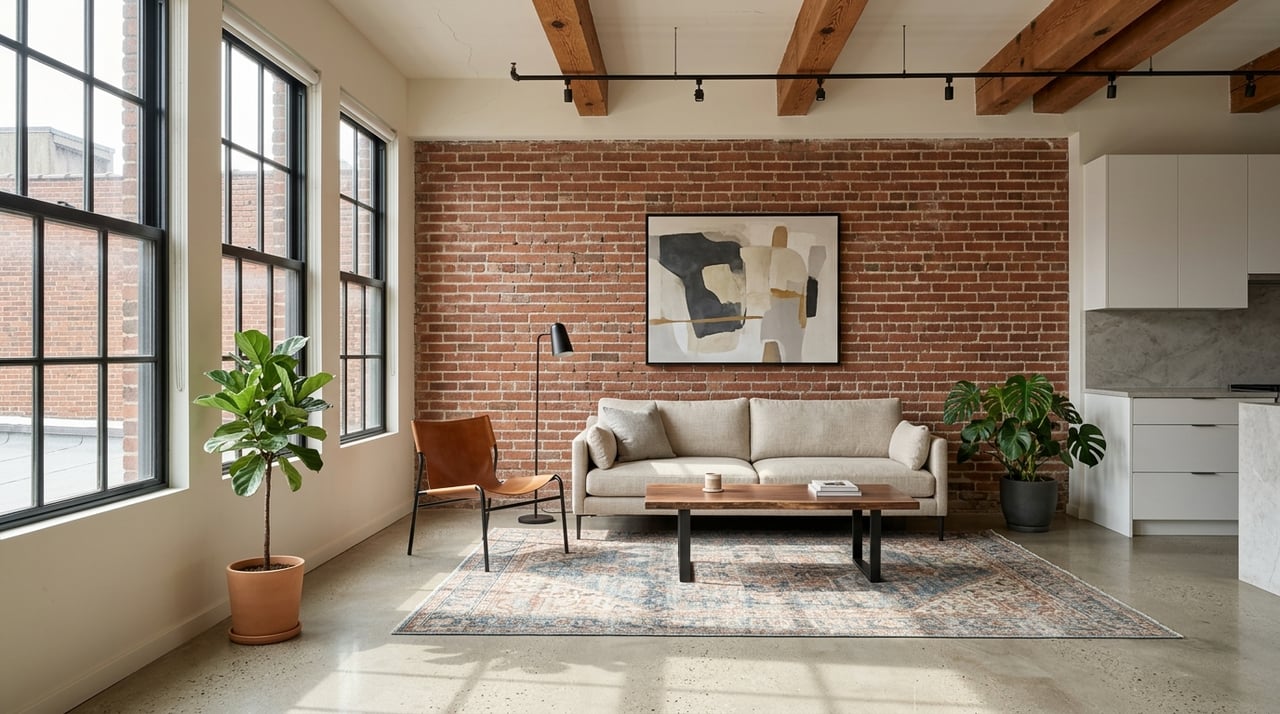
The housing stock here is shaped by adaptive reuse. City materials note that many of the district’s earliest buildings were warehouses and light-industrial structures, and many former warehouse or commercial buildings have since been converted to residential use.
Architecturally, many 19th-century buildings in the district are three to four stories tall and sit directly on the sidewalk. That form creates a more urban streetscape and also explains why the area feels different from neighborhoods built around front yards, driveways, and greater separation between uses.
For buyers, the result is a housing mix that leans heavily toward lofts, condos, and apartment-style living. In practical terms, you are often choosing character, location, and convenience over suburban-style space.
What Amenities Buyers May See
Recent residential examples help show what modern Warehouse District living can include. Memoir Warehouse District, located in a historic warehouse on Julia Street, offers studio, one-, two-, and three-bedroom apartments along with concierge service, a coffee-and-cocktail bar, a 24/7 fitness studio, a rooftop pool deck, co-working space, and access to Common House amenities.
Common House describes its New Orleans location as offering coffee, dining, a rooftop pool, a gym, open coworking space, event space, and a social hall. These details are useful because they reflect the kind of amenity package buyers may encounter in newer or updated properties in the district.
That does not mean every building offers the same features, but rooftop pools, gyms, coworking areas, concierge-style services, and on-site food or beverage access are recurring themes in this part of downtown. If you want lock-and-leave convenience with a more elevated feel, that can be a strong match.
The Tradeoffs to Know
Every neighborhood lifestyle comes with tradeoffs, and the Warehouse District is no exception. City historic district materials note that the street design predates off-street parking, so parking can be part of the urban equation.
You are also less likely to find private yard space or the kind of separation that comes with lower-density neighborhoods. For many buyers, that is a worthwhile exchange for architecture, walkability, and access to dining and culture. Still, it is important to know your priorities before you start touring.
This is one reason neighborhood fit matters so much. The right property is not only about square footage or finishes. It is also about whether the way you want to live lines up with the way the neighborhood actually functions day to day.
Who Usually Loves This Area
Arts District of New Orleans describes the neighborhood as a hub for young professionals and creatives. In practical terms, the Warehouse District often appeals to buyers who want a condo or loft lifestyle, enjoy being close to museums and restaurants, and feel comfortable in a denser urban setting.
It can also be a compelling option if you are relocating and want a neighborhood that helps you plug into New Orleans quickly. The combination of architecture, culture, and convenience gives you a strong sense of place right away.
For some buyers, this area is as much a lifestyle choice as a real estate choice. If your goal is to live somewhere that reflects New Orleans’ creative side while keeping daily conveniences close, the Warehouse District deserves a serious look.
Why Local Guidance Matters Here
In a neighborhood like the Warehouse District, two properties can offer very different experiences even if they are only blocks apart. Building style, parking setup, amenities, and the surrounding mix of galleries, restaurants, and museums can all shape how a home feels in daily life.
That is where a neighborhood-focused approach matters. As a New Orleans native, Kathryn Stalter looks at more than the listing details. She helps you connect architecture, location, and long-term goals so you can make a decision that feels right both on paper and in person.
If you are exploring lofts, condos, or other design-forward homes in the Warehouse District, a clear strategy can help you focus on the buildings and blocks that best match your lifestyle. When you are ready to talk through your options, Kathryn Stalter can help you build a plan that fits how you want to live.
FAQs
What is the difference between the Warehouse District and the Arts District in New Orleans?
- In local usage, the Warehouse District and Arts District are often used interchangeably, and both refer to the same general downtown neighborhood known for galleries, museums, dining, and loft-style living.
What kinds of homes are common in the Warehouse District?
- Buyers will mostly find lofts, condos, and adaptive-reuse apartments, along with some newer mixed-use residential buildings within the historic warehouse setting.
What is Warehouse District living like day to day?
- Daily life often centers on walkable access to coffee, galleries, museums, restaurants, and nightlife, with a more urban feel than lower-density neighborhoods.
What amenities do Warehouse District condos and apartments often include?
- In newer or updated properties, common amenities may include rooftop pools, gyms, coworking spaces, concierge-style services, and on-site dining or beverage options.
What is the main tradeoff of living in the Warehouse District?
- The biggest tradeoffs are usually limited yard space and less parking, since the historic street layout predates modern off-street parking expectations.