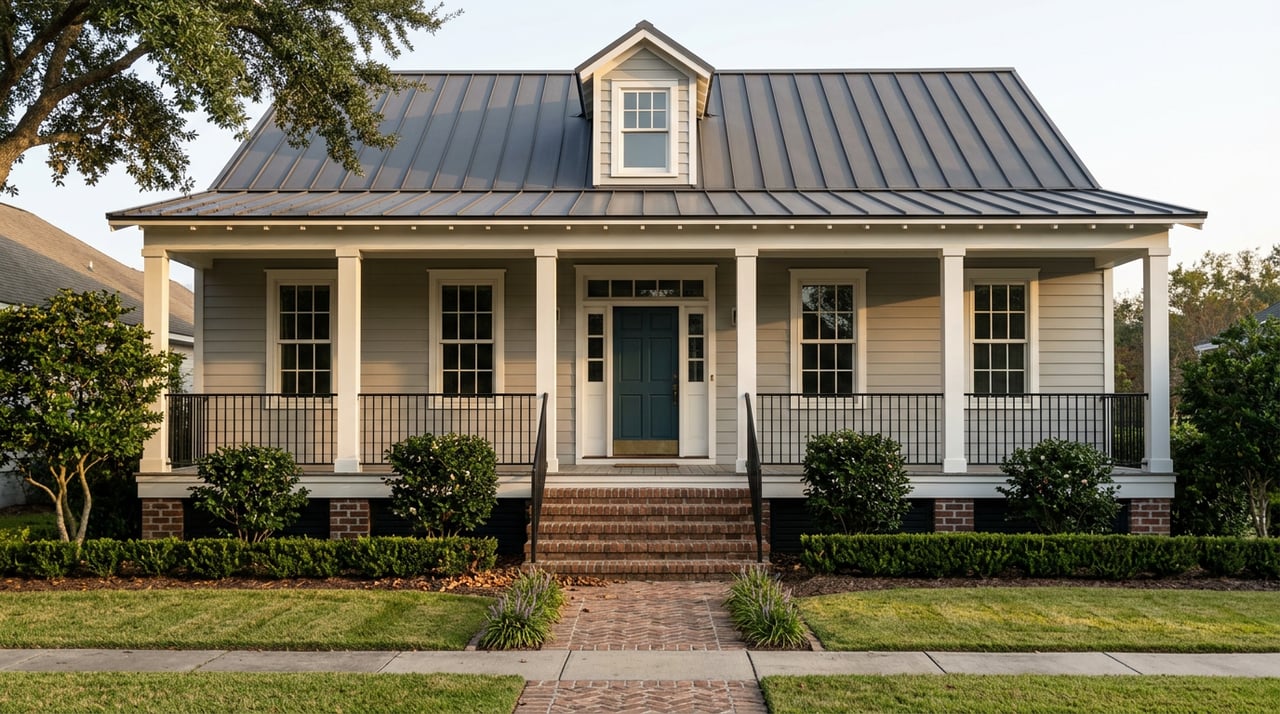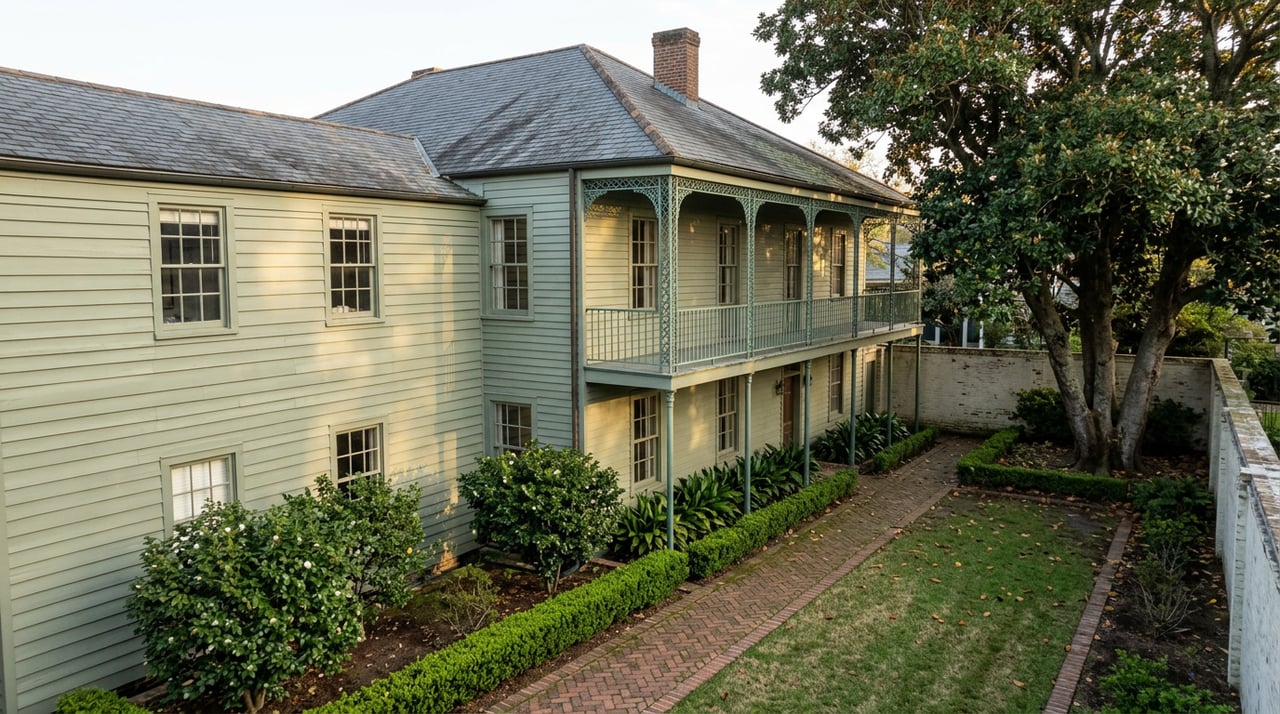
In February 2026, the New Orleans Historic District Landmarks Commission sat through a hearing on a badly overgrown property in the Garden District. The owners, who live next door, wanted to demolish it and expand their side yard. A historic consultant argued the building had lost its claim to protection entirely: an inappropriate facade remodel, a large rear addition, and a past interior fire had erased most of what made it a contributing structure. Commission staff disagreed, calling the property salvageable despite its condition. The Garden District Neighborhood Association sent someone to speak. In the end, the commission denied the demolition, but not before one commissioner made an observation that says more about how this neighborhood actually works than any brochure ever will: because the Garden District operates under partial control, the commission has no real way to guarantee that a saved building would ever be brought back closer to its historic form.
That single line is the whole story. People move to the Garden District expecting the strictest possible historic protection, the kind you'd find in the French Quarter or along the Lower Garden District's full-control blocks. What they actually get is something narrower, and understanding the difference matters whether you're planning a renovation or trying to figure out what protection your neighbor's house actually has.
Full Control, Partial Control, and Where the Garden District Falls
New Orleans regulates historic properties through two local bodies. The French Quarter answers to the Vieux Carré Commission, which reviews essentially everything, courtyards and rear elevations included. Everywhere else with a local historic designation falls under the Historic District Landmarks Commission, and the HDLC splits its territory into two tiers. In full-control districts, the commission must approve virtually all exterior work visible from a public right-of-way, plus any new construction. Places like the Lower Garden District, Irish Channel, and the frontage along St. Charles Avenue fall into this category.
The Garden District does not. On June 7, 2007, the City Council approved the Garden District's designation as a Partial Control Local Historic District, covering the area generally bounded by Magazine Street, Delachaise Street, Carondelet Street, and Jackson Avenue. That designation gives the HDLC jurisdiction over exactly three things: new construction, demolition, and demolition by neglect. Nothing else.
You can see the contrast play out on paper. The commission's August 12, 2026 meeting agenda included a request to expand an existing garage at 5800 St. Charles Avenue, a full-control address further upriver. In a Partial Control district like the Garden District, that same kind of project, expanding a structure that already exists, typically wouldn't reach the commission's desk at all, because it isn't new construction and it isn't demolition. That same agenda also included a request at 7003 St. Charles Avenue to demolish and rebuild a garage, which is a useful reminder of what doesn't change: demolition and new construction still require review no matter which control tier a property sits in.
What Partial Control Actually Exempts
For a Garden District homeowner, this means routine renovations, additions, window and door replacements, and roofing changes generally don't require a Certificate of Appropriateness the way they would in a full-control district, where the commission must approve nearly everything visible from the street. Because the Garden District's designation was never written to cover that category of work, an owner replacing windows or adding a rear addition isn't automatically routed through the same review that governs a full-control block.
Practically, that can mean a faster and less expensive renovation timeline. Full-control review can add four to eight weeks once a project needs a public hearing, since the Architectural Review Committee and the full Commission each meet only once a month. A Garden District renovation that doesn't touch new construction or demolition skips that layer entirely and moves straight into the city's standard permitting process.
What the Commission Couldn't Promise
The trade-off shows up on the other side of that same coin, and the February 2026 hearing is the clearest illustration of it. The commission wanted to save the building. Staff argued it was structurally viable. But because Partial Control strips the HDLC's authority down to new construction, demolition, and demolition by neglect, the commission had no mechanism to require the owners to restore the altered facade, remove the incompatible addition, or bring the building back toward its historic appearance, even after voting to deny the teardown. The same designation that frees a Garden District homeowner from routine review also limits what the neighborhood can compel from someone else's property once a building has already been altered.
That's worth sitting with if you're buying here expecting the same layer of protection you'd get in a full-control district. The Garden District's zoning and architecture do a great deal of the work of preserving its character. The HDLC, by design, does less of it here than its reputation suggests.
What This Means If You're Evaluating a Garden District Property
A few practical steps make sense before you write an offer or plan a renovation:
- Confirm whether the address falls inside the 2007 boundary (Magazine, Delachaise, Carondelet, Jackson) rather than assuming Garden District branding equals full-control status.
- Don't expect a compliance file for past additions or renovations. Many were never reviewed by the HDLC because they didn't need to be, which means a seller may not have permits or approvals on hand for work that would require them elsewhere.
- Check for open code enforcement issues tied to demolition by neglect. Under the city's ordinance, an owner cited for demolition by neglect gets 30 days from notice to begin corrective work before the case moves toward an enforcement hearing.
- If your plans include new construction or anything that meets the city's demolition threshold, expect the same commission review timeline that applies anywhere else in an HDLC district.
None of this makes the Garden District a riskier place to buy. It makes it a different kind of historic district than its full-control neighbors, like the Lower Garden District or Irish Channel, and that distinction changes what due diligence should actually look like depending on which side of the boundary a property sits.
The Bigger Picture
The Garden District isn't alone in this. Uptown carries a similar partial designation, where HDLC review is limited to demolition. What makes the Garden District case worth understanding on its own is how visible the trade-off became in a single public hearing: a commission that wanted to protect a building, and a designation that left it without the tools to guarantee the outcome it wanted. That's the real shape of historic protection in this neighborhood, and it's worth knowing before you assume the rules here work the same way they do everywhere else in the city.
If you're weighing a Garden District purchase or trying to understand what a renovation would actually require before you buy, The Kathryn Collection can walk through the specifics with you. Schedule a free consultation to talk through what a property's history and its historic-district status mean for your plans.