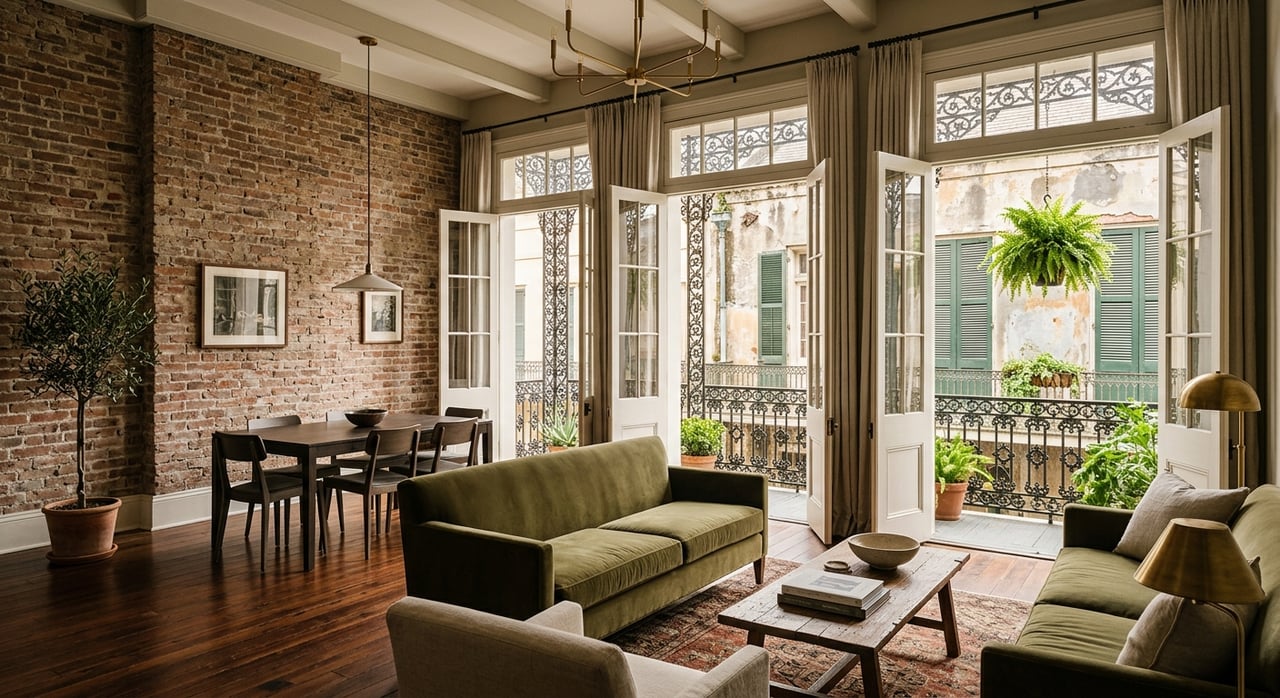
If you have ever wondered whether the French Quarter is a dream address or simply a great place to visit, the honest answer is: it depends on what kind of daily life you want. Living here is immersive, walkable, and full of architectural character, but it also comes with noise, tourism, older buildings, and more rules than many buyers expect. If you are considering a move to the French Quarter, this guide will help you understand the real tradeoffs so you can decide whether the lifestyle truly fits you. Let’s dive in.
French Quarter living feels different
The French Quarter is not a typical neighborhood of wide lots, driveways, and predictable floor plans. According to the National Park Service’s overview of the Vieux Carré, it is one of New Orleans’s oldest and most compact historic districts, bounded roughly by Canal Street, Rampart Street, Esplanade Avenue, and the Mississippi River.
That setting shapes daily life in a big way. Streets are narrow, buildings sit close together, balconies reach over sidewalks, and courtyards often hide behind carriageways. You are living in historic urban fabric, not a conventional residential subdivision.
Walkability is a major perk
One of the biggest advantages of living in the French Quarter is how much you can do on foot. The area is designed around walking, and the French Quarter Management District specifically highlights improving walkability and the pedestrian-friendly environment as part of its mission.
For many residents, that means daily errands, dining, coffee runs, and spontaneous outings happen without much planning. You can step outside and be in the middle of the city’s rhythm almost immediately, which is a major draw if you value convenience and connection over extra private space.
The CBD becomes part of your routine
The French Quarter does not exist in isolation. Just across Canal Street, the Central Business District adds another layer to the lifestyle with shops, restaurants, theaters, bars, parks, and historic buildings of its own.
In practice, many locals treat the CBD as an extension of Quarter living. When the Quarter feels crowded or heavily visitor-focused, crossing Canal can give you access to a different pace and a broader mix of everyday amenities.
Transit can reduce car dependence
You may not need to rely on a car as much as you would in many other parts of the region. New Orleans streetcar service connects the area through the Canal line, Riverfront line, and Rampart/St. Claude line, making it easier to move between the Quarter, downtown, and nearby neighborhoods.
That said, this is not the same as living in a fully transit-oriented major city. You can often live comfortably with less car use, but your exact experience will depend on your work, routine, and how often you travel beyond the urban core.
The architecture is the lifestyle
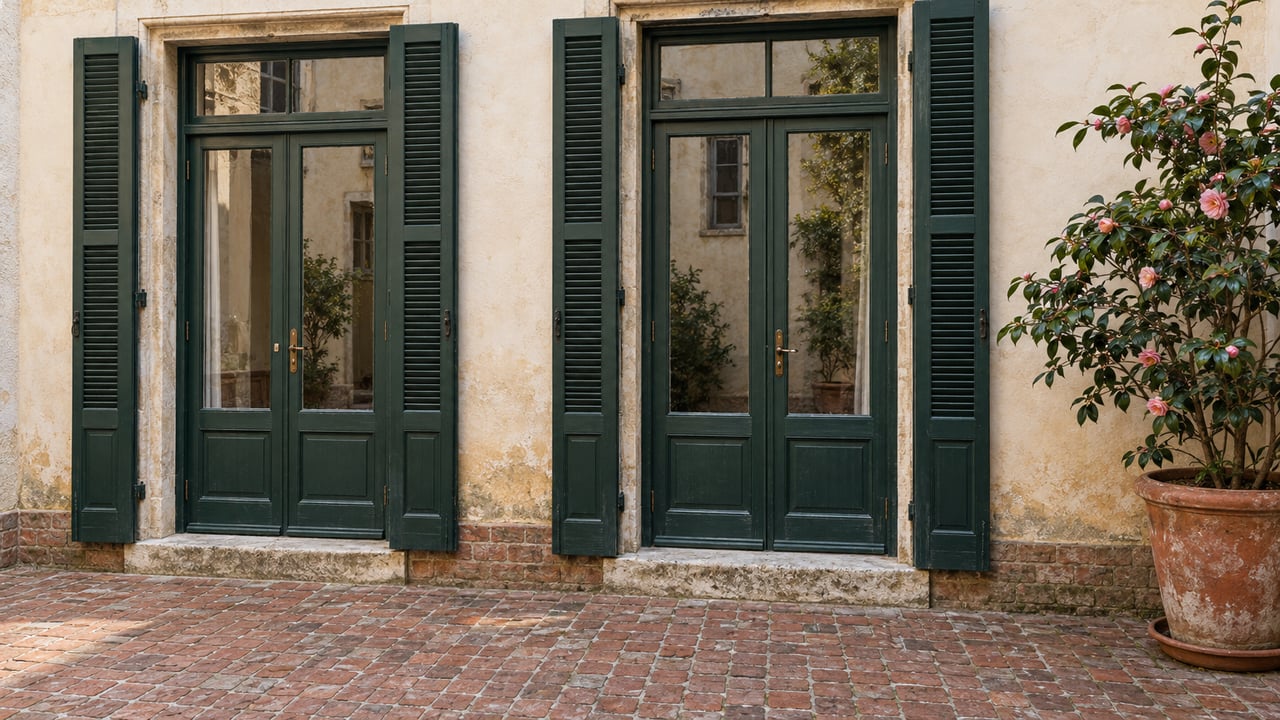
People are often drawn to the French Quarter for its atmosphere, but the architecture is a big part of what makes living here feel so distinct. The district includes Creole cottages, townhouses, center-hall houses, shotguns, and mixed-use historic structures shaped by French, Spanish, Caribbean, and later commercial influences, based on the Vieux Carré Commission design guidelines.
If you buy a condo or home here, you are often buying into that history. Instead of standardized layouts, you are more likely to find irregular floor plans, vertical living, shared courtyards, galleries, passageways, and a stronger connection between indoor and outdoor space.
Expect charm over predictability
That charm is real, but it comes with tradeoffs. Historic Quarter homes and condos may have smaller rooms, unusual circulation, stair-heavy layouts, or less open-plan flow than newer construction.
The Vieux Carré townhouse guidance also points to common forms like exterior-oriented circulation and passageways rather than the interior-hall layouts many buyers expect. If you love character, that can feel special. If you want a modern, highly uniform layout, it may feel limiting.
Noise and activity are part of the deal
This is one of the most important things to understand before you move. The French Quarter is not simply a historic residential district. It is also one of the city’s most active cultural and visitor destinations.
The official French Quarter neighborhood page describes a nightlife scene unlike any other, and the National Park Service notes the area’s soundtrack of cathedral bells, jazz trumpets, and ship horns. During major events like French Quarter Festival, Southern Decadence, and New Year’s Eve, the activity level rises even more.
Your block matters a lot
Not every part of the Quarter feels exactly the same. In general, your experience will vary depending on how close you are to Bourbon Street, Canal Street, or major event corridors.
If you enjoy lively streets, late-night energy, and culture at your doorstep, this may be exactly what you want. If you prefer quiet evenings, easy privacy, and a more suburban sense of retreat, the French Quarter can feel intense.
Parking is tougher than many buyers expect
Parking is one of the most common lifestyle surprises. In a district built centuries before modern car patterns, easy curb parking is simply not the norm.
The French Quarter Management District’s street markings update notes active efforts to identify illegal parking zones, and rules in the district prohibit parking on sidewalks, curbs, corners, and neutral grounds, among other restricted areas. That means many residents rely more on walking and transit than on keeping a car parked just outside their door.
If a vehicle is essential to your routine, parking logistics should be part of your decision early on. It is better to evaluate that upfront than assume the neighborhood will function like other parts of New Orleans.
Ownership usually means more upkeep
French Quarter properties can be deeply rewarding to own, but they are rarely low-maintenance. Older buildings often require more hands-on attention, and exterior changes are closely regulated.
The district requires a Vieux Carré Commission permit before exterior work begins, and the French Quarter Management District’s laws and code resources make clear that upkeep issues like roofs, gutters, balconies, drainage, stairways, and sanitation matter. In other words, the beauty of historic ownership often comes with more oversight and more responsibility.
Renovation flexibility is limited
If you are the kind of buyer who likes to personalize a property quickly, this is worth noting. Exterior work is not something you can approach casually in the Quarter.
That does not mean improvements are impossible. It means you should expect a more deliberate process, especially when working with older structures in a highly regulated historic district.
Flood and storm awareness matter
The French Quarter’s location is part of its identity, but it is also part of the ownership conversation. The National Park Service notes that New Orleans chose this site despite its precarious location, surrounded by swamps and subject to flooding and storms, with the Quarter lying barely above sea level.
For buyers and renters, this does not just live in the background. It affects how you think about risk, preparedness, and the realities of owning property in a historic riverfront district.
Short-term rental flexibility is limited
Some buyers assume a French Quarter property offers easy short-term rental potential. That is not the case under current law cited by the French Quarter Management District.
According to the district’s summary of New Orleans laws, leasing living accommodations in the Vieux Carré for less than 60 days is illegal. If you are evaluating a purchase with income flexibility in mind, this is a major factor to understand before you buy.
Who tends to love living here
The French Quarter tends to be a strong fit for buyers who value experience over predictability. It can be especially appealing if you want:
- Walkability and easy access to dining and culture
- Historic architecture and one-of-a-kind spaces
- A home that feels deeply connected to New Orleans identity
- Less dependence on a car for daily life
- A lifestyle that blends residential living with city energy
This is usually not the best match if your top priorities are quiet, easy parking, low-maintenance ownership, or a highly standardized home layout.
What to think through before you buy
Before purchasing in the French Quarter, it helps to ask yourself a few practical questions:
- How comfortable are you with regular street activity and event crowds?
- Do you need predictable parking for daily life?
- Are you open to an older, less conventional floor plan?
- Do you understand the maintenance needs of a historic property?
- Are you buying for personal use rather than short-term rental flexibility?
- Does a walkable, architecture-forward lifestyle matter enough to outweigh the tradeoffs?
If your answers lean yes, the Quarter may feel less like a compromise and more like the point.
The real takeaway
Living in the French Quarter means choosing a lifestyle that is rare, layered, and unmistakably New Orleans. You get beauty, walkability, culture, and architectural character that are hard to replicate anywhere else, but you also accept noise, regulation, parking friction, and the realities of older buildings.
For the right buyer, those tradeoffs are not drawbacks. They are exactly what make the neighborhood special. If you want help weighing whether the French Quarter fits your lifestyle, goals, and long-term plans, Kathryn Stalter can help you navigate the details with a local, strategic perspective.
FAQs
What is daily life like in the French Quarter?
- Daily life in the French Quarter is walkable, active, and closely tied to the neighborhood’s tourism, dining, architecture, and event calendar.
Can you live in the French Quarter without a car?
- Often yes for day-to-day living, especially with walkability, nearby CBD access, and streetcar connections, though your needs may vary depending on work and routine.
Are French Quarter homes and condos usually quiet?
- Usually not, especially near Bourbon Street, Canal Street, and major festival or nightlife corridors.
What do French Quarter condo layouts usually look like?
- Many are in historic buildings and may include smaller rooms, vertical layouts, shared courtyards, galleries, passageways, and less conventional floor plans than newer construction.
Is owning property in the French Quarter low maintenance?
- Usually no, because older buildings often need more upkeep and exterior changes are subject to historic-district review and permitting.
Can you use a French Quarter property as a short-term rental?
- Current law cited by the French Quarter Management District says leasing living accommodations in the Vieux Carré for less than 60 days is illegal.
Does the CBD matter when living in the French Quarter?
- Yes, many residents use the CBD as a practical extension of Quarter living for shops, restaurants, theaters, and other daily conveniences just across Canal Street.