If you love old houses, the Alexandria Garden District rewards a slower pace. This is the kind of neighborhood where a short walk can turn into a long look at porches, rooflines, brick streets, and the way mature landscaping softens every view. Whether you are drawn to historic character, thinking about homeownership in a district with architectural depth, or simply curious about one of Alexandria’s best-known residential areas, this stroll will help you notice what makes the neighborhood special. Let’s step into it.
Why the Garden District stands out
The Garden District in Alexandria is both a local historic district and, in part, a National Register historic district. The City of Alexandria describes it as the city’s largest local historic district, while the National Register covers a smaller section within the broader neighborhood.
Its story is rooted in Alexandria’s early 20th-century growth. Much of the district developed from about 1905 to 1930 as the city expanded southwest from downtown across the rail line, and that era still shapes the look and feel of the neighborhood today.
The result is not a museum piece with one repeated style. Instead, you get a layered residential setting that reflects the city’s prosperity during the lumber-boom years and reads like a true historic suburb, shaped over time rather than all at once.
What to notice on your walk
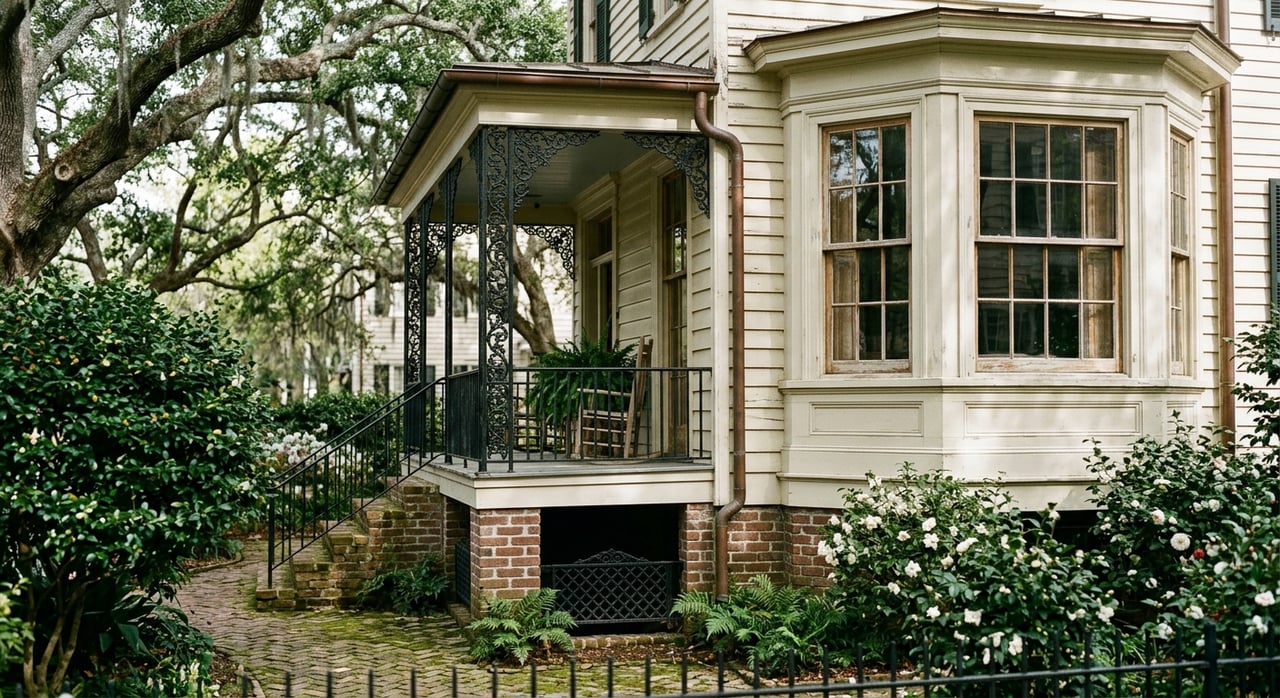
A good architecture walk here is less about finding one landmark and more about reading the rhythm of the block. Your eye naturally moves from front porches to roof shapes, then to masonry, trees, and the texture of the street itself.
One of the district’s defining qualities is contrast. Official documentation notes that a grand mansion can sit near a modest bungalow, which gives the neighborhood a lived-in, varied feel instead of a formal, uniform one.
That range matters. Most buildings are single-family homes, and the housing stock includes everything from middle-class cottages and bungalows to larger 1920s and 1930s houses, often on the same long residential streets.
Key streets to explore
The district’s homes are concentrated along four long streets: Marye, Jackson, Albert, and White. If you are walking for architectural character, these corridors give you the clearest sense of the neighborhood’s scale and variety.
Jackson Street is the main traffic artery through the district, and preservation materials note that many of the grandest homes are found there. As you move away from Jackson, the streets tend to show more modest homes, which makes the shift in scale part of the experience.
That progression is one of the district’s pleasures. You can see how different house types and styles relate to one another without leaving the same neighborhood fabric.
Architectural styles you will see
Two styles lead the conversation in the Garden District: Craftsman/Bungalow and Colonial Revival. If you are scanning rooflines, porch supports, symmetry, and entry details, those styles often give you the first clues.
But the district is more eclectic than many first-time visitors expect. The National Register nomination also identifies Queen Anne holdovers, English Cottage, Mediterranean Revival, French Eclectic, and Tudor Revival.
That mix gives the area much of its personality. Instead of a single visual script, the district offers a collection of early 20th-century design ideas interpreted across homes of different sizes and levels of ornament.
Craftsman and bungalow details
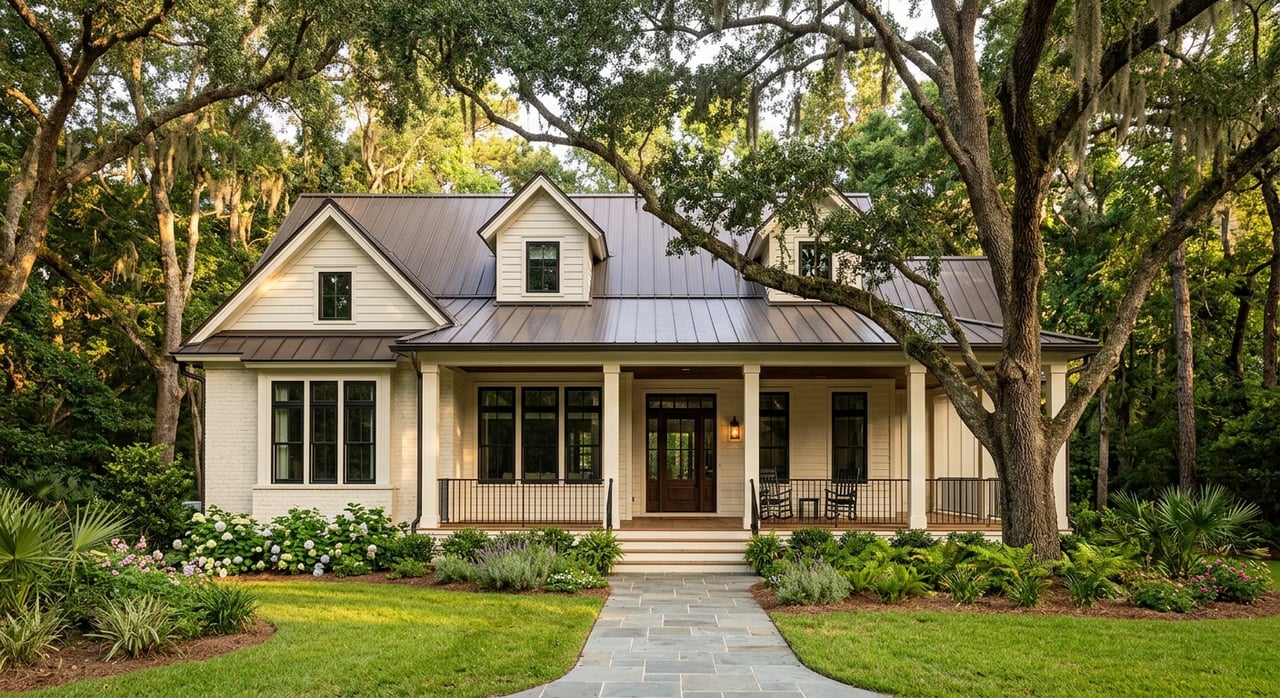
Craftsman and bungalow homes often anchor the district’s more modest side. On a stroll, you may notice inviting front porches, practical massing, and an overall sense of everyday livability that still feels warm and appealing.
These homes are a reminder that the Garden District was not built only for show. It developed as a real residential neighborhood with houses that balanced charm, scale, and function.
Colonial Revival and larger homes
Colonial Revival homes often bring a more formal presence to the street. In the Garden District, they help define the neighborhood’s grander blocks, especially along key corridors where larger houses make the strongest visual impression.
These homes contribute to the district’s sense of stature, but they do not overwhelm it. Their presence works because they exist alongside smaller cottages and bungalows, creating a more interesting and human-scaled streetscape.
The value of stylistic variety
The Tudor, Mediterranean, English Cottage, French Eclectic, and lingering Queen Anne influences give the district texture. Even if you are not naming styles as you walk, you will likely feel the variety through changes in roof pitch, facade shape, window pattern, and exterior finish.
That eclectic character is part of what makes the neighborhood memorable. It encourages you to keep looking because the next house often shifts the mood of the block.
The streetscape matters as much as the houses
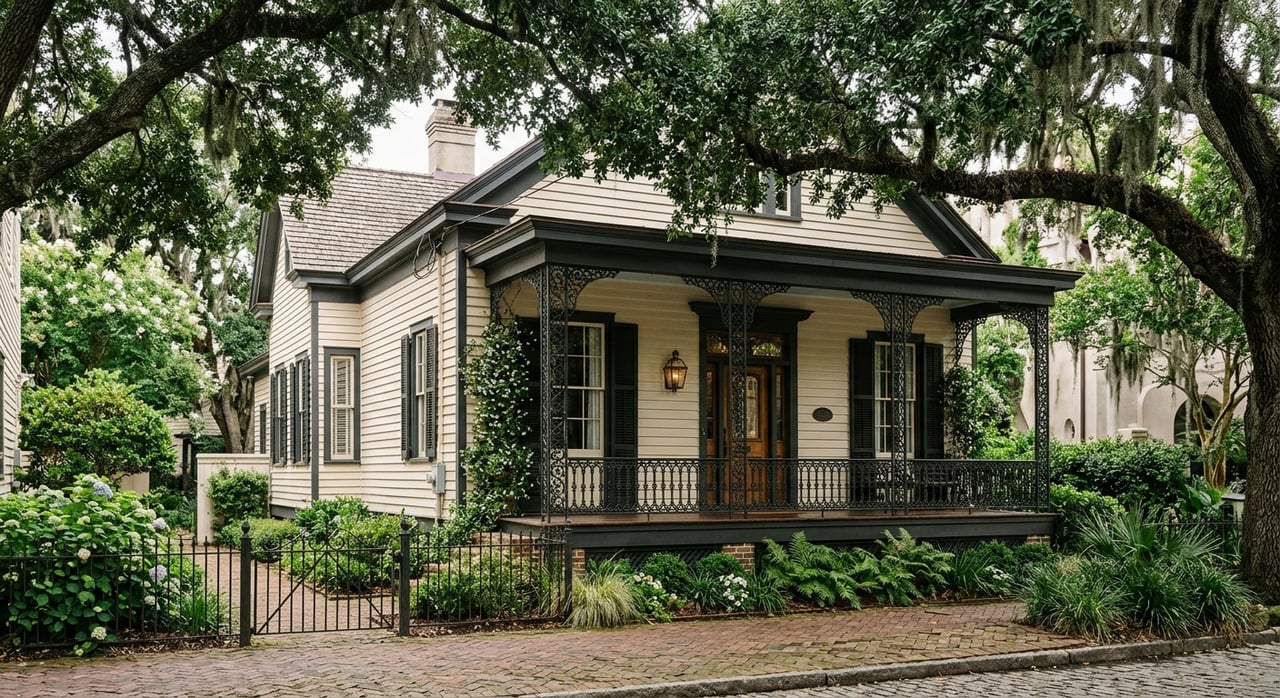
The Garden District’s atmosphere is shaped by more than architecture alone. Mature, lush vegetation and historic brick paving on many streets contribute heavily to the neighborhood’s ambiance.
In practical terms, that means your walk is rarely just about facades. Trees, layered planting, and the softened edges of the streetscape create a setting that feels shaded, settled, and visually rich.
The City of Alexandria’s Urban Forestry Department notes that trees and vegetation soften building lines, add privacy, and contribute to a community’s general character and sense of place. In the Garden District, that idea is easy to see in real time.
Why this neighborhood feels so immersive
Some historic districts impress from a distance. The Alexandria Garden District tends to work at walking speed.
Because the blocks are residential, the homes are low-rise, and the vegetation is dense, the neighborhood feels immersive rather than theatrical. You are not just looking at architecture. You are experiencing how homes, landscape, and street texture work together.
That is also why the district appeals to more than preservation enthusiasts. If you value homes with presence, detail, and a strong sense of setting, this neighborhood offers all three.
What ownership looks like here
If a stroll through the district leaves you imagining what it would be like to own a historic home here, the local framework is worth understanding. The Alexandria Historic Preservation Commission defines a historic district as an area where buildings and their settings are significant for architectural, cultural, or social history, and it notes that historic districts can preserve historic properties while allowing rehabilitation for modern use.
For homeowners, that creates room for both stewardship and practicality. The city’s FAQ states that there is currently no exterior regulation for homes in Alexandria’s local historic districts, though the commission encourages owners to maintain and repair distinctive architectural elements.
That lighter-touch approach does not mean preservation culture is absent. The AHPC says staff can help with period-appropriate paint choices and design questions, which can be especially helpful if you want to update a home without losing the details that make it special.
Preservation-minded support
The city also notes that historic buildings may be eligible for up to 45% in state and federal tax credits. For buyers considering restoration or thoughtful rehabilitation, that can be an important part of the conversation.
The preservation community adds another layer of support. The National Park Service interview references holiday home tours and a house fair that shares restoration practices, tax-credit information, and salvage resources with residents.
Taken together, those details suggest that living here is not only about owning a historic house. It is also about participating in a neighborhood where architectural care and local history still matter.
Why this matters for buyers and sellers
For buyers, the Garden District offers something increasingly hard to find: architectural variety with a strong sense of place. You are not choosing from one narrow housing type. You are weighing scale, style, streetscape, and maintenance needs within a neighborhood that has clear historic identity.
For sellers, that identity is part of the value story. Buyers who are drawn to this district are often responding to a full package that includes mature landscape, brick-paved streets, porch culture, and the contrast between modest cottages and larger landmark homes.
In a neighborhood like this, details matter. The right strategy starts with understanding what kind of buyer will connect with a home’s architecture, lot setting, and place within the district’s overall rhythm.
If you are exploring the Alexandria Garden District as a buyer, seller, or simply someone who values architectural character, a local, detail-driven perspective can make all the difference. To talk through historic homes, neighborhood fit, or your next move with a thoughtful strategy, connect with Kathryn Stalter.
FAQs
What architectural styles define the Alexandria Garden District?
- The district is best known for Craftsman/Bungalow and Colonial Revival homes, with additional examples of Tudor Revival, Mediterranean Revival, English Cottage, French Eclectic, and some Queen Anne holdovers.
What streets should you notice in the Alexandria Garden District?
- Marye, Jackson, Albert, and White are the main residential streets highlighted in preservation materials, with Jackson Street noted as the main corridor and home to many of the grander houses.
What makes a walk through the Alexandria Garden District feel distinctive?
- The experience is shaped by mixed house sizes and styles, front porches, historic materials, mature vegetation, and historic brick paving on many streets.
What is it like to own a historic home in the Alexandria Garden District?
- The city describes a preservation-minded approach that supports maintenance and rehabilitation for modern use, with staff guidance available for design questions and period-appropriate paint choices.
Are homes in the Alexandria Garden District heavily regulated?
- According to the City of Alexandria’s Historic Preservation Commission FAQ, there is currently no exterior regulation for homes in Alexandria’s local historic districts, even though the district remains historically significant.
Are there incentives for restoring historic properties in Alexandria?
- The city states that historic buildings may be eligible for up to 45% in state and federal tax credits, and it also offers educational support through preservation-related resources and events.